



Arkansas Window Tint Laws 2026: Legal Tint Percentages for Cars, Trucks & SUVs
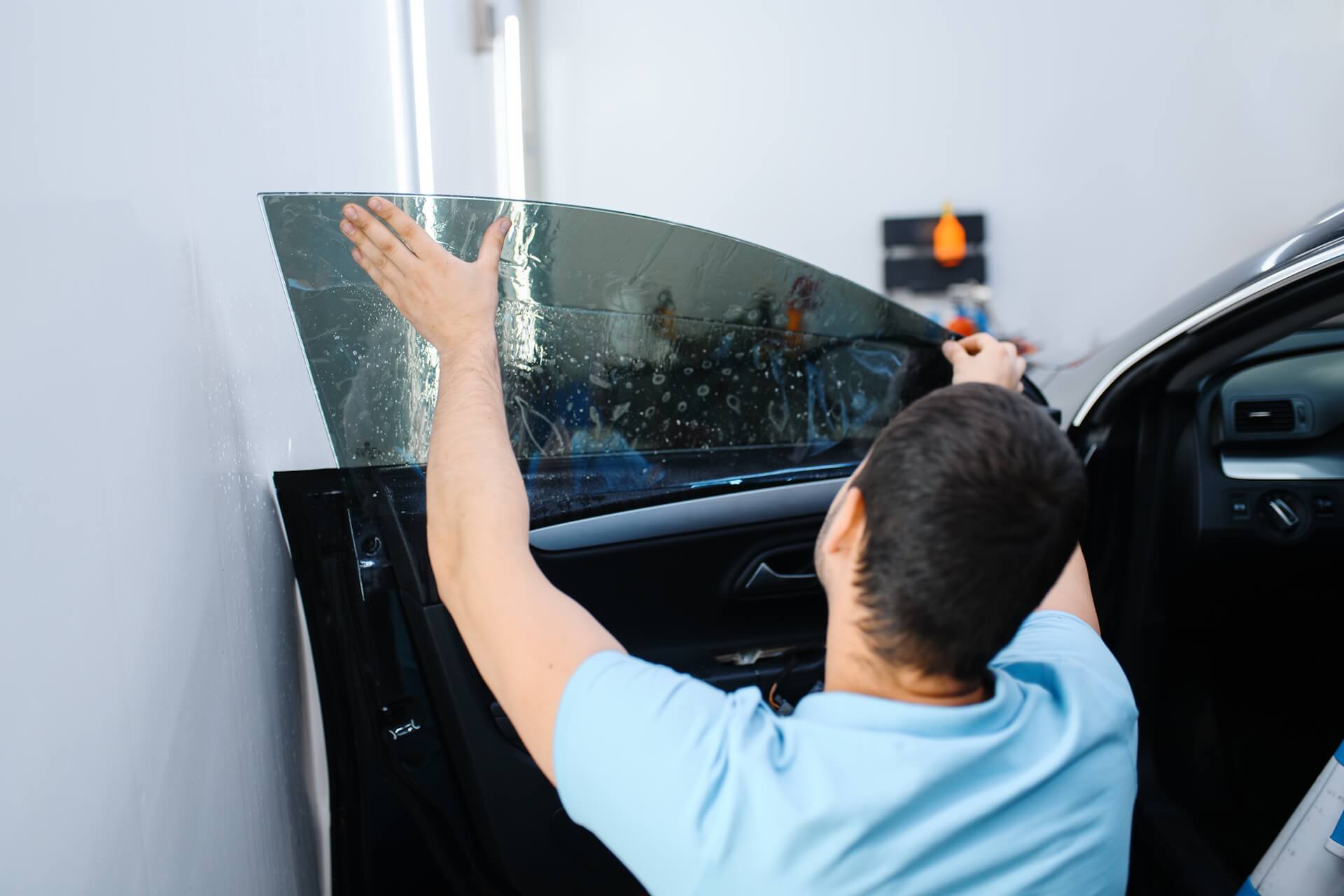
Arkansas laws surrounding window tinting are designed to be as clear and as straightforward as possible. After all, the more transparent they are, the easier it is for everyday automotive owners and businesses to follow them.
If you’re considering tinting your car windows and want to be sure you’re on the right side of the law, take note of these 2026 Arkansas window tint laws for cars, trucks, vans, and SUVs:
Sun Strip ‘Eyebrow’
Whether you have a sedan, an SUV, a truck, or a van, you may apply a non-reflective tint to the top five inches of the sun strip, also known as the ‘eyebrow’ of your windshield. However, it may not extend more than five inches below the center of your windshield.
Many people choose to tint the sun strip to reduce glare, enhance visibility and safety, and provide heat and UV protection. It can also add a sleek, custom appeal to a vehicle!
Side Windows and Side Wings (1994+)
If your vehicle is a 1994 model or newer, you may cover the side windows and side wings with an aftermarket tinting material on the right or left of the driver, or on the right or left immediately behind the driver. That window film must have at least 25% net visible light transmission (VLT).
VLT refers to the percentage of light that can pass through a material like glass or film and reach the eye. The higher the VLT, the more light can pass through, while the lower the VLT, the less light that passes through. The allowed tint percentage includes factory glass and the film combined, known as net VLT.
If you are tinting the side windows immediately behind the driver in a truck, bus, trailer, motor home, or multipurpose passenger vehicle, you may apply a window film with a VLT of at least 10%.
Rearmost Windows (1994+)
On all 1994 models and newer vehicles, any aftermarket window tint installed on the rearmost windows must have a VLT of at least 10%.
Abiding by Window Tinting Laws in Arkansas
Whether you live in Fort Smith, AR, or elsewhere in the state, you likely want to be sure that you’re abiding by all window tinting laws and can provide proof when required. That’s why Arkansas Code Title 27. Transportation § 27-37-306 states that you must attach a label to the front glass, immediately to the left of the driver, with the name and phone number of the company that installed the window tint film. This should affirm that all vehicle tinting complies with Arkansas’ window tinting laws.
What About Pre-1994 Vehicles?
The latest 2026 window tinting laws in Arkansas apply to vehicles manufactured in 1994 or later, so what about vehicles built before then? Pre-1994 vehicles without old legal tint must follow the current tint laws, the same as 1994+ vehicles.
However, older vehicles with tint installed under the previous 1991 laws may be ‘grandfathered’ in as long as ownership remains the same. If ownership is transferred or the vehicle is sold, they must comply with current tint laws.
The year 1994 is mentioned in the most recent tinting laws because that was when the modern VLT percentage system was standardized, and the earlier 1991 tint rules were replaced.
Exceptions to Arkansas Window Tinting Laws
Motorists can be exempt from standard Arkansas window tinting laws if they have been diagnosed with a disease or a disorder by a physician who deems it in the best interest of the motorist to be exempt. In this instance, they must carry a physician’s certificate in their vehicle.
For vehicles tinted before August 16, 2013, proof of the tint installation date and the contact information of the company that performed the tint must be carried in the vehicle. After that date, the motorist only needs the physician’s certification attesting to their specific window tinting needs.
With a physician’s exemption, window tinting laws are as follows:
- Side windows and side wings on the immediate right or left of the driver or the right or left immediately behind the driver: 20% VLT
- Rearmost windows: 10% VLT
- Front windshield: 50% VLT
Out-of-State Visitors
Window tinting laws vary from state to state. Some states, such as California and New York, have strict front-side window requirements of 70% VLT, while Arizona and Florida allow much darker tinting.
With that in mind, you won’t be required to abide by local window tinting laws in Arkansas if you’re operating a vehicle registered in another state and are following their tinting laws.
How to Ensure Legal Window Tinting in Arkansas
Accessing legal window tint in Arkansas is as straightforward as visiting a trusted automotive window tinting professional in your area. They are up to date with all window tinting laws and can ensure you receive only legal window film.
Don’t be afraid to read reviews and testimonials and ask friends and family for recommendations. The more highly regarded a business is, the more peace of mind you can have, knowing it operates legally.
Schedule Window Tint Installation from Solar Shield in Fort Smith, AR
Now that you understand the laws, you can request window tint installation with confidence! Contact the trusted team at Solar Shield in Fort Smith, Arkansas, to learn more. We offer a range of high-quality window tint films for cars, trucks, SUVs, and vans alike, all of which comply with local laws.